-
Tian Dong Industrial Park, Decheng District Economic and Technological Development Zone, Dezhou City

Fire and Flammability Behavior of UHMWPE Sheets
I’ve sat through enough material-selection calls to know the pattern: someone waves a plastic datasheet, points at one fire number, and acts like the argument is over, even though the number is tiny, conditional, thickness-dependent, and often useless for the code path that actually governs the job. That’s the setup here. Every time.
Table of Contents
But let’s stop pretending. Standard UHMWPE is a wear beast, yes—low friction, high impact resistance, great abrasion performance, the kind of stuff solids-handling people love because it keeps bins, chutes, bunkers, and conveyors moving when steel starts grabbing or product starts bridging. In fire, though? Different story. Badly different. A representative current supplier datasheet for TIVAR 88 lists a melting temperature of 135°C, a continuous allowable service temperature in air of 80°C, an oxygen index of 20%, and UL 94 HB at 3 mm. I frankly believe too many buyers read that sheet like a sales flyer instead of a warning label.
And that HB line—this is where the industry gets cute. UL Solutions says the UL 94 HB method is a horizontal burning test, with the rating tied to burning rate and specimen thickness; the V ratings, by contrast, look at vertical burning behavior, afterglow, and whether burning drips ignite cotton below. That’s not a rounding error. It’s the whole ballgame.
So when somebody says “our UHMWPE has a fire rating,” I usually ask a rude question: a rating for what exact exposure, in what orientation, at what thickness, under which approval framework? Silence usually follows. Because UHMWPE flammability and project compliance are not the same thing—not in buildings, not in transport, not anywhere people may have to get out fast while smoke, heat, and dripping polymer start changing the clock.
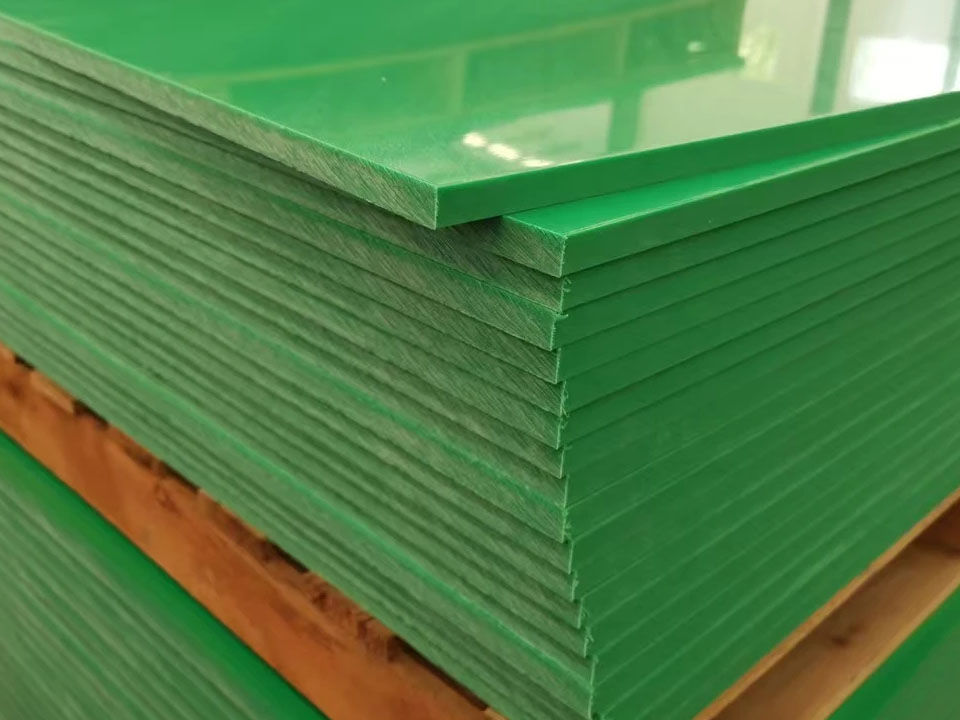
There is, to be fair, a real exception. Not many. TIVAR BurnGuard is explicitly presented by Mitsubishi as a static dissipative and flame retardant UHMW-PE grade, and the datasheet shows UL94 V-0 @ 6 mm plus an oxygen index of 28%. That matters. It also proves my point. UL 94 V-0 UHMWPE exists as a specialty grade; it is not the native condition of every sheet with “UHMWPE” stamped on the PO.
Here’s the ugly truth: plenty of content online blurs that line on purpose. It takes the existence of one FR grade and smears the halo over the whole category. I don’t buy it. In a wear-liner spec for a chute skirt or hopper cheek plate, that sloppiness is annoying. In a station fit-out, tunnel enclosure, platform interface detail, or occupied building assembly, it’s how bad procurement becomes future litigation. (UL Solutions)
And no, you can’t rescue the argument by saying “but it passed UL 94.” UL’s own Code Authorities page is unusually direct on this point: UL 94 is a small-scale test for plastic materials used in parts for devices and appliances, and “model codes do not recognize the small-scale UL 94 fire ratings,” with “no technical basis” for accepting UL 94 in place of other code-specified ratings. Read that twice. Then stop using HB as a shortcut for suitability in the built environment.
That distinction gets painfully concrete when transport people enter the room. NFPA 130 is about fire protection and life safety in fixed-guideway transit and passenger rail systems; in other words, once you are talking stations, tunnels, guideways, or rail-adjacent public areas, the discussion moves away from coupon-test chest-thumping and into system-level tenability, egress, smoke management, and life-safety analysis. Whole different universe.
Need a reality check? Use public data, not brochure copy. The U.S. Fire Administration estimates 344,600 residential building fires and 110,000 nonresidential building fires in 2023. That doesn’t mean UHMWPE caused them. That’s not my point. My point is simpler and less comfortable: the fire-event base rate is high enough that material decisions in occupied assets should be made like risk decisions, not like commodity purchases.
And then there’s the legal tail. It drags on for years. Reuters’ coverage of the final Grenfell inquiry report reported in September 2024 that the 2017 disaster, which killed 72 people, was blamed on failings across government, the construction industry, and the firms involved in fitting the exterior with flammable cladding. Different assembly, yes. Same professional lesson. If combustible polymer systems get mis-sold as safe in the wrong envelope, the paper trail becomes evidence.
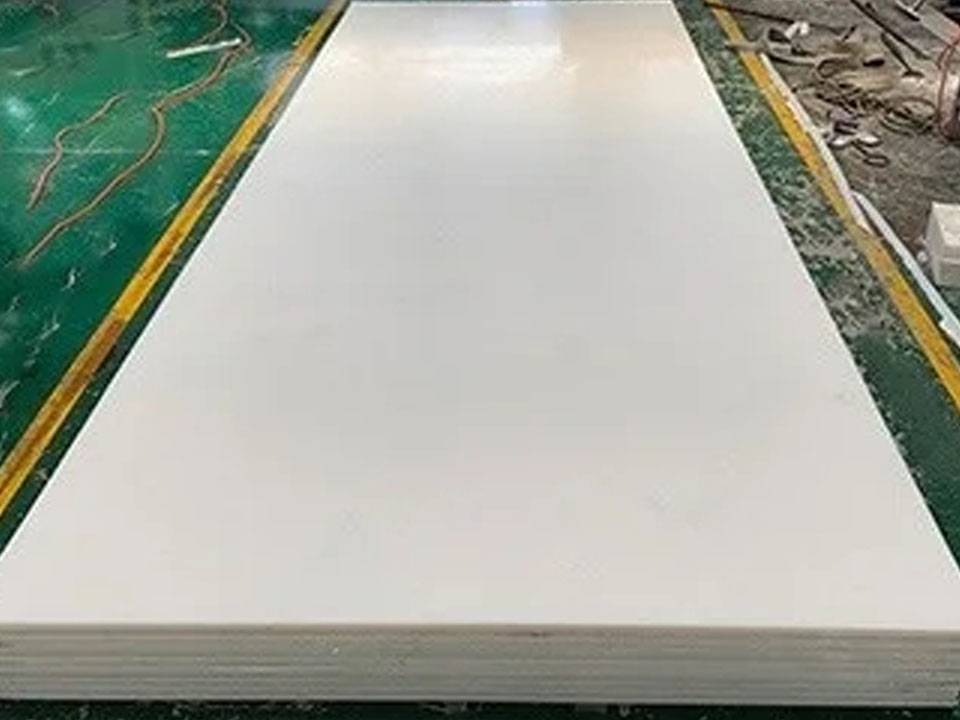
The remediation numbers are almost worse because they show how long the hangover lasts. A November 2024 GOV.UK remediation release said 4,998 residential buildings over 11 metres in England were being tracked for unsafe cladding, and only 1,463 buildings—29%—had completed remediation. That’s the part specifiers rarely price in: one bad fire-performance assumption can become a decade of surveys, claims, replacements, and reputational damage. Slow pain. Expensive pain.
Now, before anyone accuses me of trashing the polymer category, let me be precise. I still like UHMWPE where it belongs. In bulk-solids handling, wear is the tax collector. Flow-assurance guys know this already. Projects like coal bunker lining plate UHMWPE wear panels and corrosion-resistant coal hopper liner plates sit squarely in the classic abrasion-stick-slip world, where low friction and impact resistance usually beat prettier spec language. If the commercial comparison is against HDPE coal bunker limit plates, that’s normal buyer behavior. And when the brief shifts toward shielding chemistry rather than flow mechanics, borated polyethylene sheet options are solving a different problem entirely. Different jobs. Different failure modes. Different decision tree.
That’s why I keep coming back to the same hard rule: don’t let excellent wear performance launder poor fire performance. A sheet can be brilliant in a bunker and wrong in a corridor. It can earn money in a hopper and create liabilities in a tunnel. Same polymer family. Totally different risk posture. Why do people still try to flatten that distinction? Because HB looks neat in a table, and neat numbers sell.
| Application scenario | Standard UHMWPE sheet | Flame-retardant UHMWPE sheet | My call |
|---|---|---|---|
| Bulk solids chutes, hoppers, liners | Usually viable when wear is dominant and fire exposure is limited | Usually overkill unless ignition risk is elevated | Standard grade often makes sense |
| Conveyor wear strips and sliding parts in industrial plants | Strong wear choice, but fire review still needed near heat or ignition sources | Better if plant risk assessment flags flame spread or static concerns | Decide by hazard study, not by habit |
| Tunnels, stations, passenger transport systems | HB is a weak position for life-safety scrutiny | Better, but still not a substitute for project code compliance | Use only if the full assembly passes the required standard |
| Building interiors or facade-adjacent components | Bad default if anyone is relying on UL 94 alone | Still needs building-specific fire acceptance | Most teams should switch to a code-tested alternative |
I’m comfortable saying the table is the real-world split. Standard grades commonly show up as UL 94 HB in supplier literature; specialist FR grades can reach V-0; and UL itself says those small-scale plastic ratings are not a substitute for the ratings building codes actually ask for. That is why the honest spec question isn’t “is UHMWPE good?” It’s “good at what, under which fire regime, and inside whose approval process?”
FAQs
Is UHMWPE flammable?
UHMWPE is a combustible polyethylene material that, in standard sheet grades, is commonly represented by UL 94 HB rather than a self-extinguishing vertical classification, which means engineers should treat it as a wear-oriented plastic with notable fire limitations, especially where ignition, flame spread, or occupancy risk enters the design basis.
Yes—it burns, and that shouldn’t be softened with marketing fluff. From my experience, the minute someone answers this question with “but it’s very tough,” you know the conversation is drifting away from fire science and back into sales copy.
What is the typical UHMWPE fire rating?
The typical UHMWPE fire rating shown on representative supplier datasheets is UL 94 HB at a stated thickness, often accompanied by an oxygen index and temperature limits, which together indicate that ordinary UHMWPE is not being positioned as a self-extinguishing fire-barrier material for code-sensitive occupied spaces.
That’s the number buyers usually see first. It’s also the number they overread most often.
Can flame-retardant UHMWPE reach UL 94 V-0?
Yes, but only for specialty formulations: flame-retardant UHMWPE sheets can be marketed with UL 94 V-0 performance at specified thicknesses, and those grades should be understood as distinct engineered products rather than proof that standard UHMWPE sheet fire behavior is broadly equivalent across the category.
So, yes, UL 94 V-0 UHMWPE is real. No, it doesn’t magically reclassify commodity UHMWPE.
Is UL 94 enough for buildings or tunnels?
No; UL 94 is a small-scale plastics test for parts used in devices and appliances, and UL states that model codes do not recognize those ratings as a substitute for other code-required fire ratings, while transport work often sits inside larger life-safety frameworks such as NFPA 130.
This is the question that separates engineers from box-tickers. Buildings and tunnels are not datasheet hobbies.
When should a specifier switch away from standard UHMWPE?
A specifier should switch away from standard UHMWPE when the application requires demonstrated reaction-to-fire performance, code-recognized fire acceptance, or system-level life-safety compliance in occupied spaces, because abrasion resistance alone does not offset combustible behavior where evacuation, smoke, and tenability become part of the design problem.
My bias is obvious here, and I’m fine with that: if people—not just product flow—are exposed to the downside, standard HB-grade UHMWPE deserves a very hard second look.
Stop buying this stuff on autopilot. Check the grade. Check the thickness. Check the actual UHMWPE fire rating. Check whether the job is really a wear-liner problem or a life-safety problem wearing a wear-liner disguise. That one distinction saves more bad specifications than most teams want to admit.